
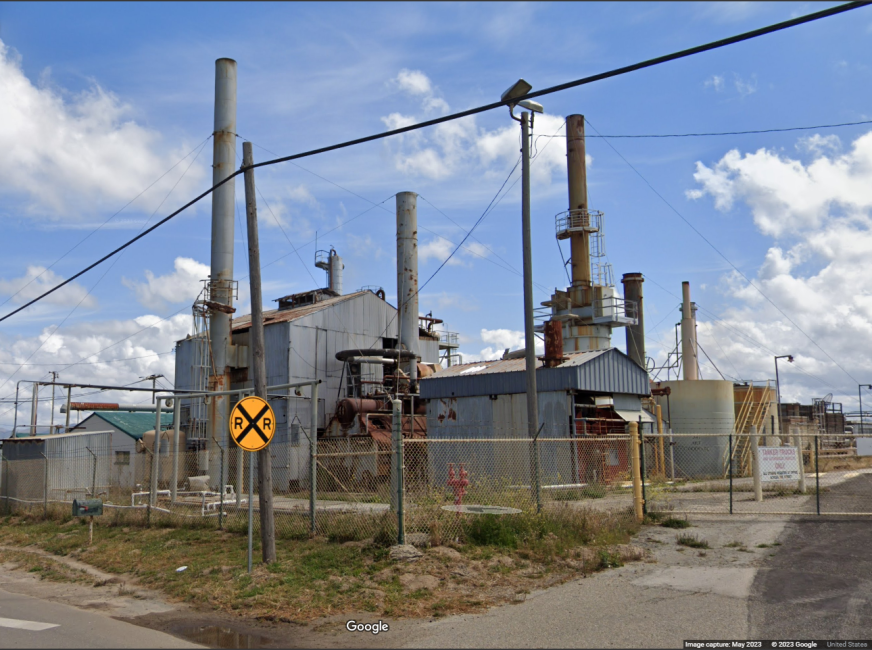



Some land uses present compatibility issues when co-located and could result in emissions that cause nuisance issues and health impacts (i.e. odors, dust, toxic air contaminants). Examples of land uses that could present compatibility issues include but are not limited to gas stations, land uses with heavy truck travel, and equipment that emits diesel or other toxic air contaminants. The siting of proposed land uses should be carefully evaluated to avoid potential nuisance issues and minimize public exposure to air pollutant emissions.
In 2005, the California Air Resources Board (CARB) developed an Air Quality and Land Use Handbook (opens in a new tab) that serves as a general reference guide for evaluating and reducing air pollution impacts associated with new land use development projects. CARB’s handbook provides recommendations and siting criteria for land development projects and encourages land use agencies to use their planning processes to ensure the appropriate separation of facilities emitting air pollutants of concern and sensitive land uses, such as residential units, childcare facilities, and schools. Where possible, CARB recommends a minimum separation between sensitive land uses and sources of air pollution. We recommend project proponents and land use agencies consider the compatibility of the project with surrounding land uses and include the appropriate separation from existing uses in the project’s design. In situations where the siting of new development may present compatibility issues and public health concerns, we recommend alternative land uses that do not lead to the long-term exposure of sensitive receptors to air pollutants be considered.
Additional Guidance for Specific Project Types
To reduce air quality and health risk impacts from mobile sources associated with warehouses and distribution centers, all feasible air pollution emission reduction measures should be included into project design, such as providing infrastructure for zero-emission trucks and transportation refrigeration units (TRUs). For more information see:
- Our list of standard operational-phase diesel equipment exhaust control measures: Attachment C Operational Diesel PM and NOx Emission Measures.
- California Air Resources Board (CARB) comment letter for freight facilities (opens in a new tab) including recommended air pollution emission reduction measures for warehouses and distribution centers.
- State of California – Department of Justice’s, paper titled “Warehouse Projects: Best Practices and Mitigation Measures to Comply with the California Environmental Quality Act (opens in a new tab)”.
- As documented in the CARB Air Quality and Land Use Handbook and in subsequent health studies, living in proximity to freeways and high traffic roadways leads to adverse health effects beyond those associated with regional air pollution.
- The EPA released a document that shows both the importance of reducing children’s exposure to traffic-related air pollution and what schools and parents can do to reduce children’s exposure. For more information see Best Practices for Reducing Near-Road Air Pollution at Schools (opens in a new tab).
- In April 2017, CARB released a technical advisory Strategies to Reduce Air Pollution Exposure Near High-Volume Roadways (opens in a new tab). In response to CARB’s technical advisory, we prepared a supplemental guidance document called Guidance for Development Near Busy Roadways (opens in a new tab), that highlights relevant sections of CARB’s technical advisory and provides additional context for Santa Barbara County.
CARB recommends avoiding siting new sensitive land uses within 50 feet of a typical gas station (defined as a facility with a throughput of less than 3.6 million gallons per year) and within 300 feet of a large gas station (defined as a facility with a throughput of 3.6 million gallons per year or greater).
For the evaluation of health risk from proposed gas stations, we accept screening HRAs using CARB’s Gas Station Risk Assessment Screening Tools (opens in a new tab). If the results from the screening-level HRA show that health risk from the gas station exceeds the applicable significance thresholds, a refined HRA should be performed in accordance with the latest District Modeling Guidelines for Health Risk Assessments, Form-15i (opens in a new tab). Alternatively, an applicant may forgo the initial screening-level assessment and proceed directly to preparation of a refined HRA. Refer to our webpage Air Toxics for Business (opens in a new tab)for general information on HRAs.
District staff recommends following CARB’s guidance and maintaining a minimum separation between new sensitive land uses and existing sources of air pollution. To help identify existing sources of air pollution, we maintain a Permitted Facilities Map (opens in a new tab). Please note the map is designed to identify facilities with APCD permits, which includes oil and gas production, drycleaners, diesel engines, and gas stations but does not necessarily include other, non-permitted sources of air pollution such as freeways and roads, distribution centers, and railways.